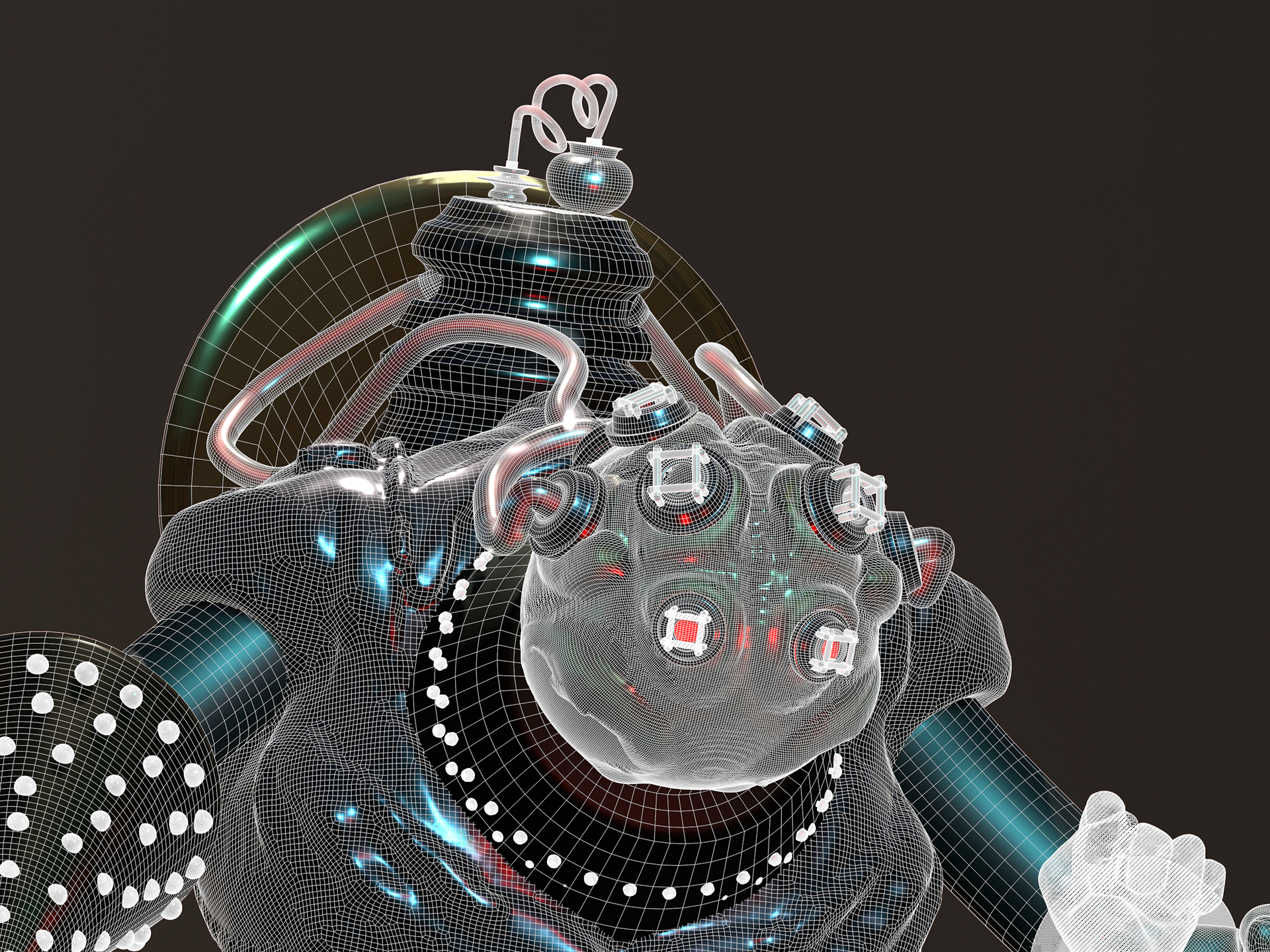
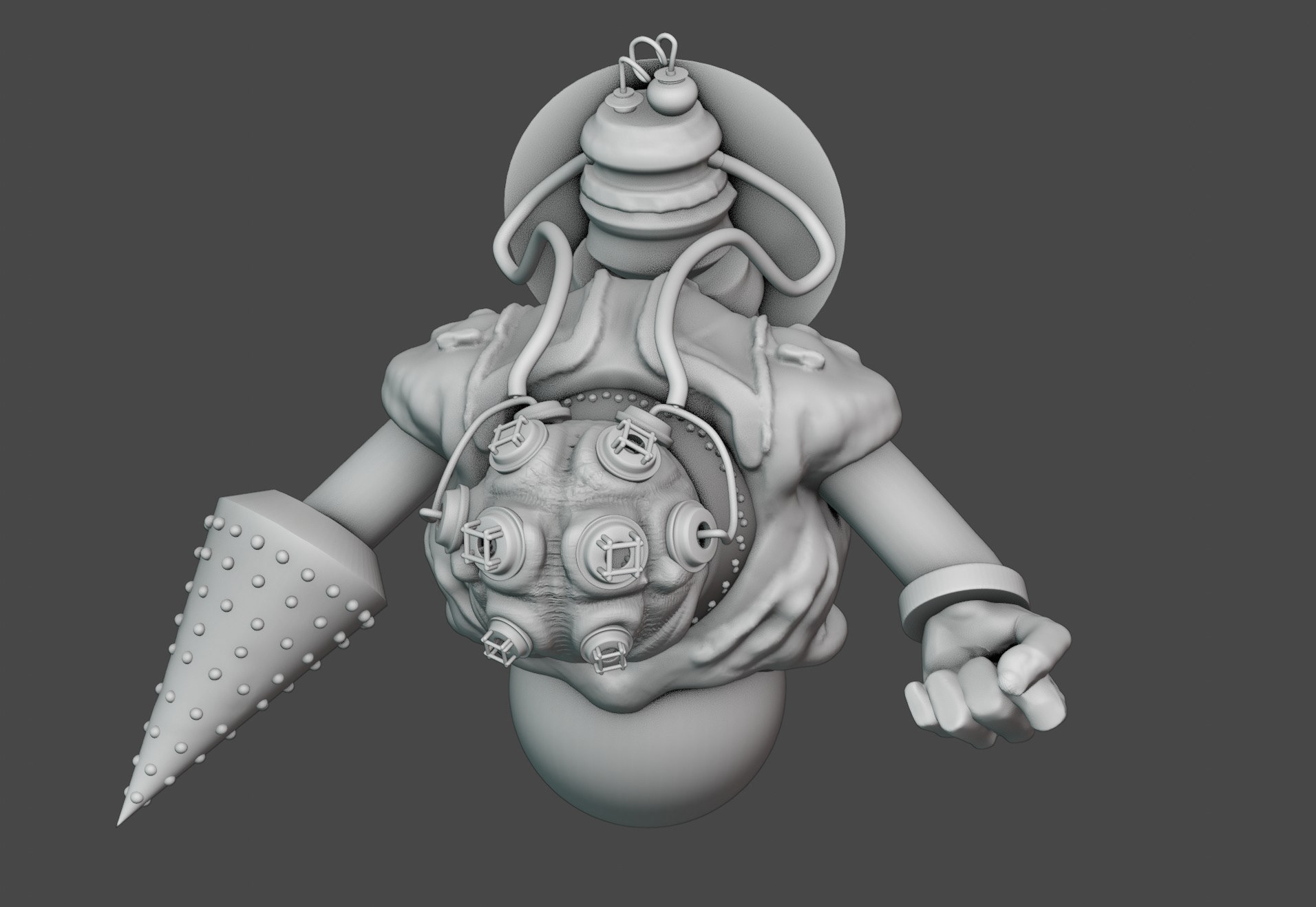
I initiated the modeling process using Nomad Sculpt, a highly intuitive and potent application. The app's rendering system consistently delivered near-perfect results. My approach involved incorporating various shapes available in the application, and experimenting with shading to refine specific sections of the model. The wireframe showcases the mesh and structural elements, with a smooth wrap applied to enhance the model's useful structure. This indicates the utilization of a high voxel size for optimal detailing. The model was texturized in Nomad Sculpt, after production was completed I was able to export this piece as an OBJ file to work within Blender.
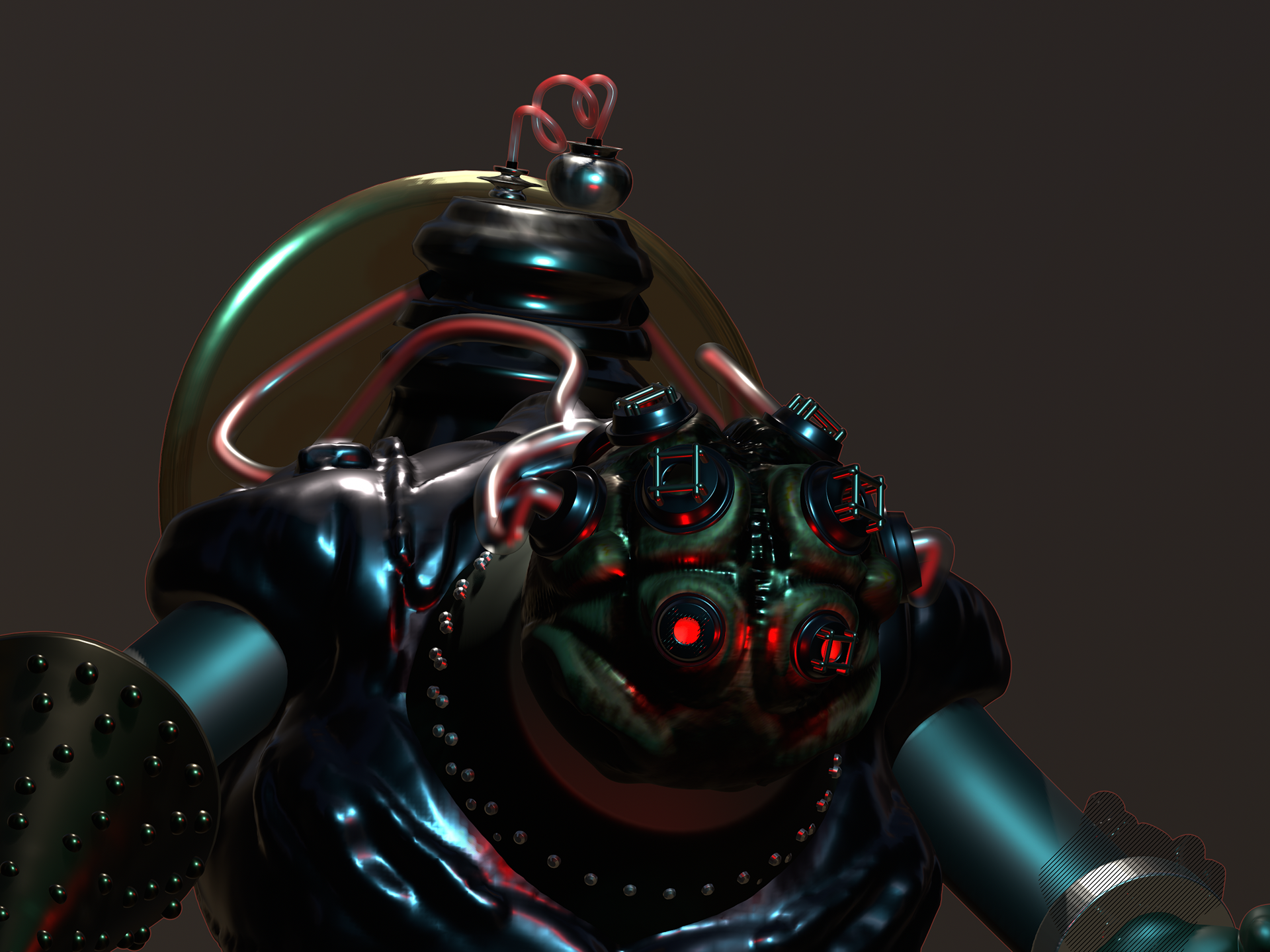
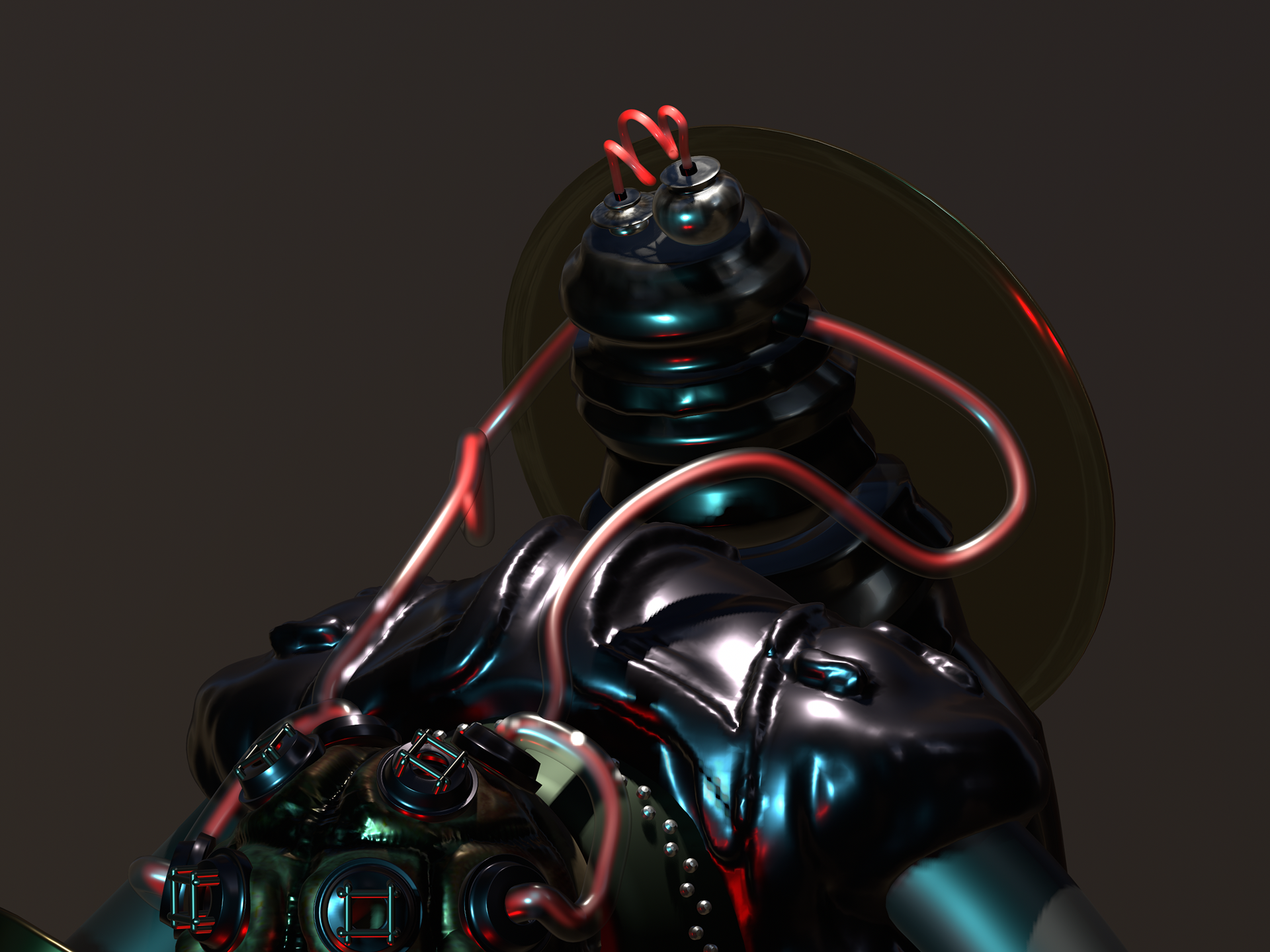
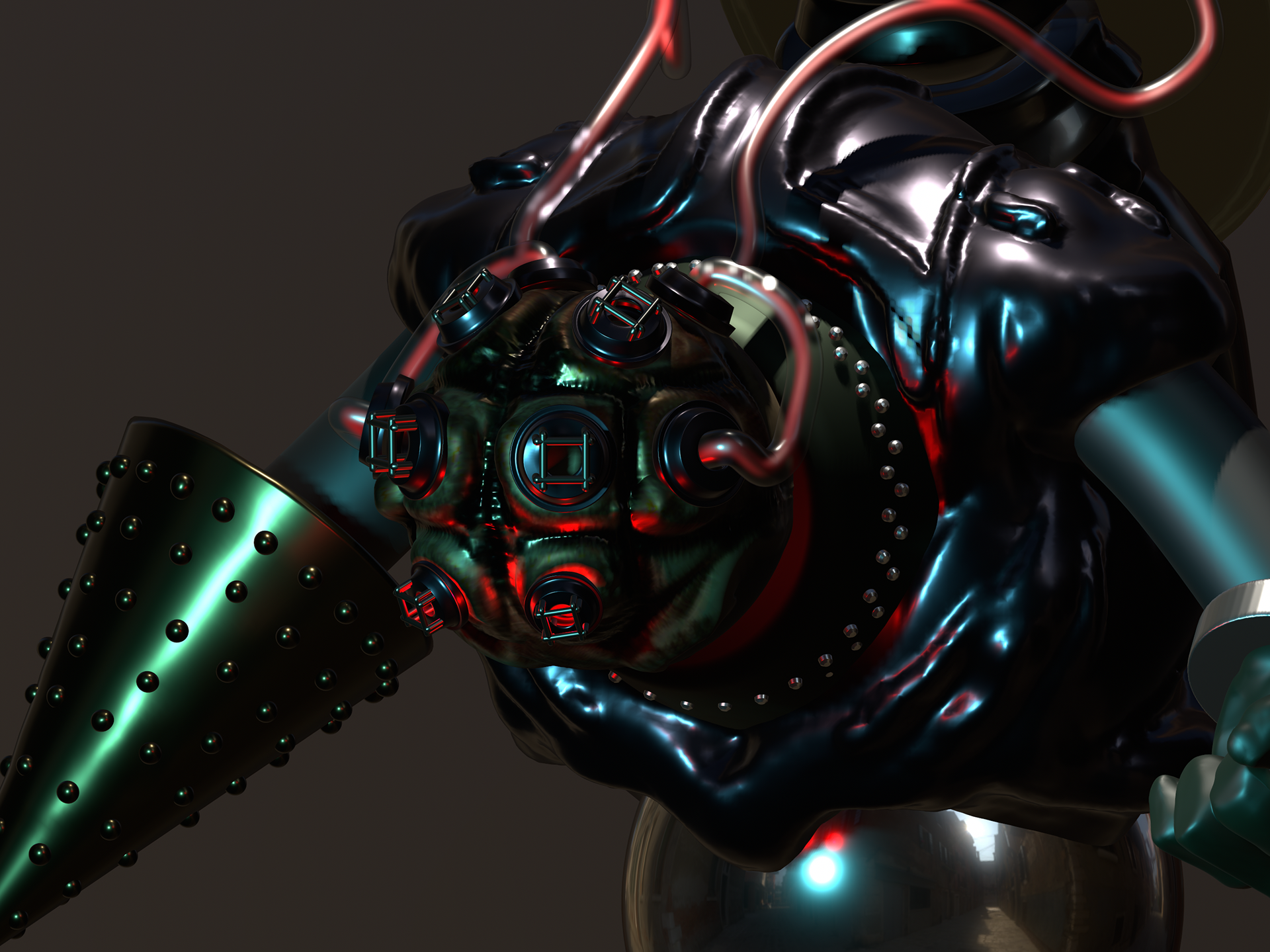
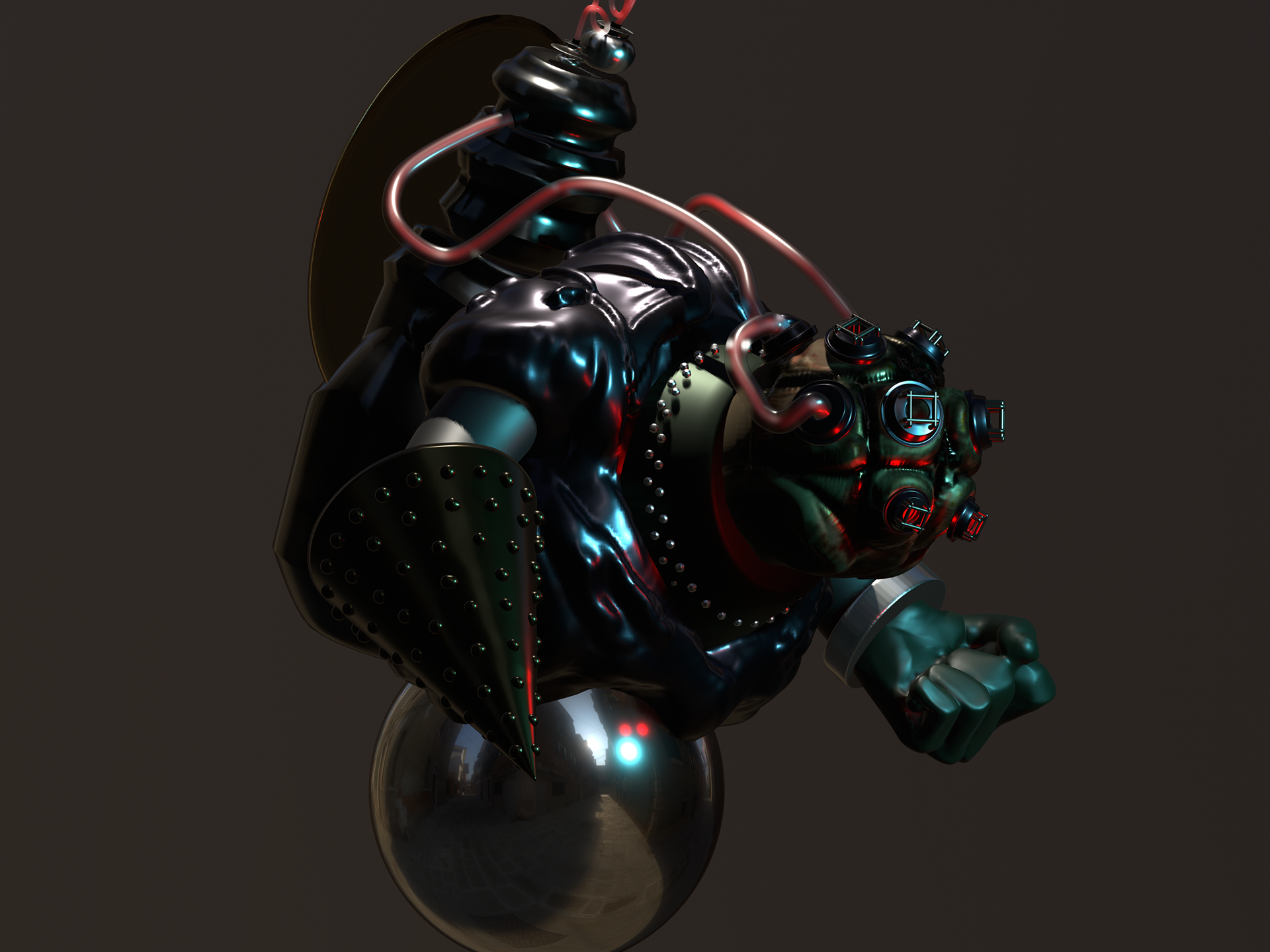
Soon after I exported the Model. The texture did not successfully syndicate with the model itself. Due to the loss of shading data, I would begin re-texturizing the model in Blender (below). I wanted to make the model life-sized. I thought it if I could get the model to be as big as me ( 5'10") It would be a great tool to display 3D content to view any detailing for precision.
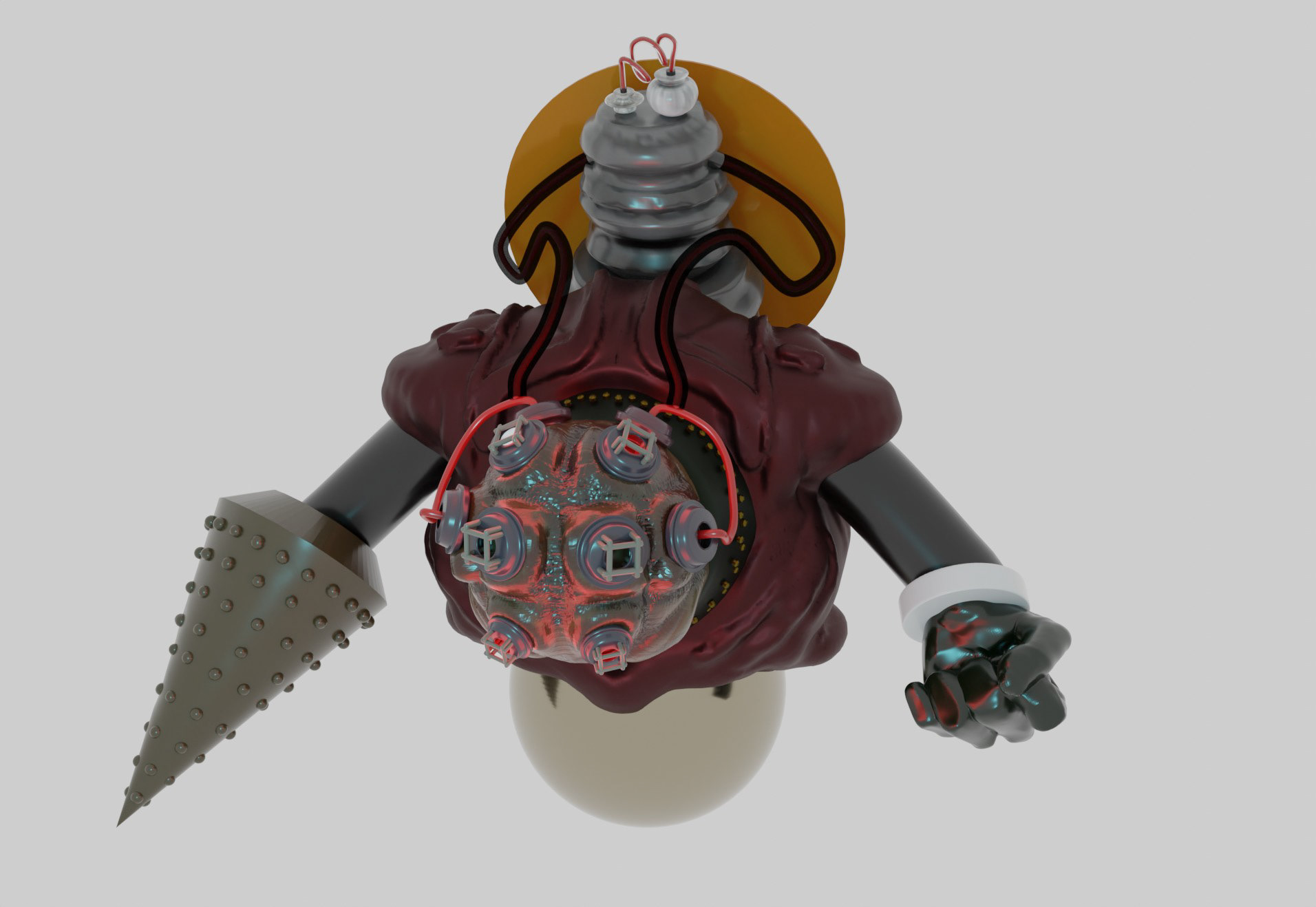
This site allowed me to convert in different ways, since I was working in Adobe Aero it was able to provide the data of the model within the UI. The tip of the model's drill was altered slightly in the compression.
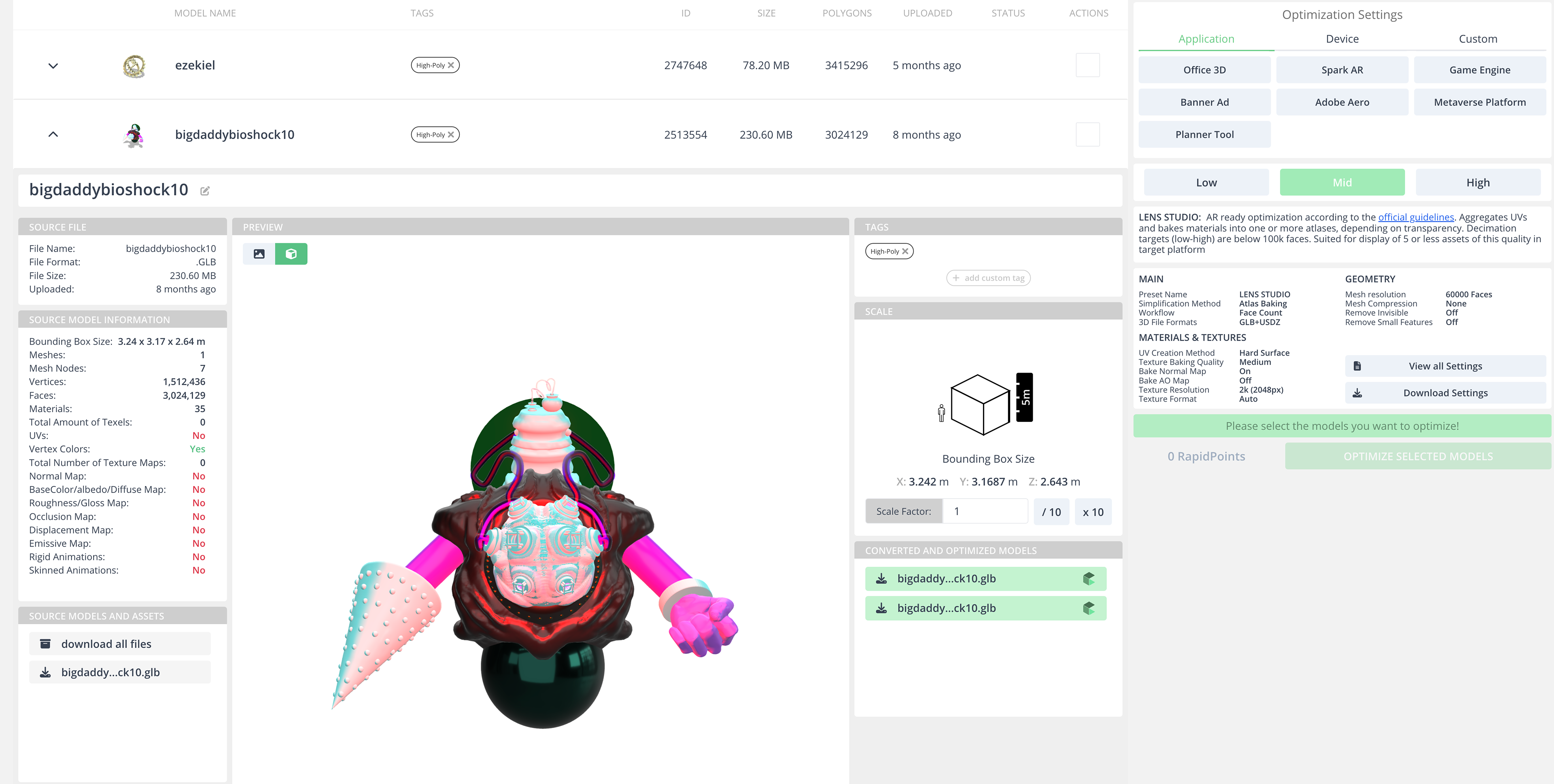
The project achieved remarkable success as the Nomad Sculpt modeling process seamlessly translated into a near-perfect rendition of the envisioned piece. The ability to scale the model to life-size for viewing marked a significant triumph, offering a tangible and immersive experience for digital artists and designers. Designers can help their clientele visualize any 3D product in real time.